History of Lithuanian Folk Festivals in North America
World War II and the Soviet occupation of Lithuania forced thousands of Lithuanians to flee their homeland and seek new lives in cities around the world. With little or no contact with their families behind the Iron Curtain, they feared losing it all – language, music, dance, and tradition. For the next several decades, they raised families, built schools, established parishes, and formed dance, theater, and choral groups to preserve their heritage. Lithuanian song and dance held a special place in their hearts. Lithuanian Dance wove a fabric that honored the homeland and ensured that their heritage would not be forgotten.
In 1957, the Chicago chapter of the Lithuanian-American Community, Inc. organized the first North American Lithuanian Folk Dance Festival, under the direction of Bruno Shotas; dancers from 18 U.S. and Canadian cities gathered to celebrate Lithuanian folk dancing. It was an historic, and wildly successful event, marking the first of many subsequent festivals.
That same year, the Lithuanian Folk Dance Institute Lietuviu Tautiniu Sokiu Institutas – LTSI was formed. Its mission is to preserve and nurture the art of folk dancing together with its music, authentic costumes, and traditions. The LTSI maintains close ties with folk dance ensembles around the world and regularly hosts a week-long training course at Camp Dainava in southeastern Michigan. The Lithuanian Folk Dance Institute, together with The Lithuanian-American Community, Inc. and The Lithuanian Canadian Community organized the folk dance festivals that have taken place approximately every four years since 1957.
Since 1991, when Lithuania once again gained independence, several dance groups from Lithuania have participated at the quadrennial North American festivals. A new wave of emigres to the US has also brought instructors and choreographers who have lent their talents to preserve the art of Lithuanian folk dancing.
1957
I Folk Dance Festival
Festival took place in Chicago, more than 1,100 dancers from 29 groups across 18 cities in the United States and Canada gathered to celebrate Lithuanian folk dancing. In addition, numerous children’s choirs totaling 800 singers performed at this inaugural event.
Artistic Director: Bruno Shotas.
1963
II Folk Dance Festival
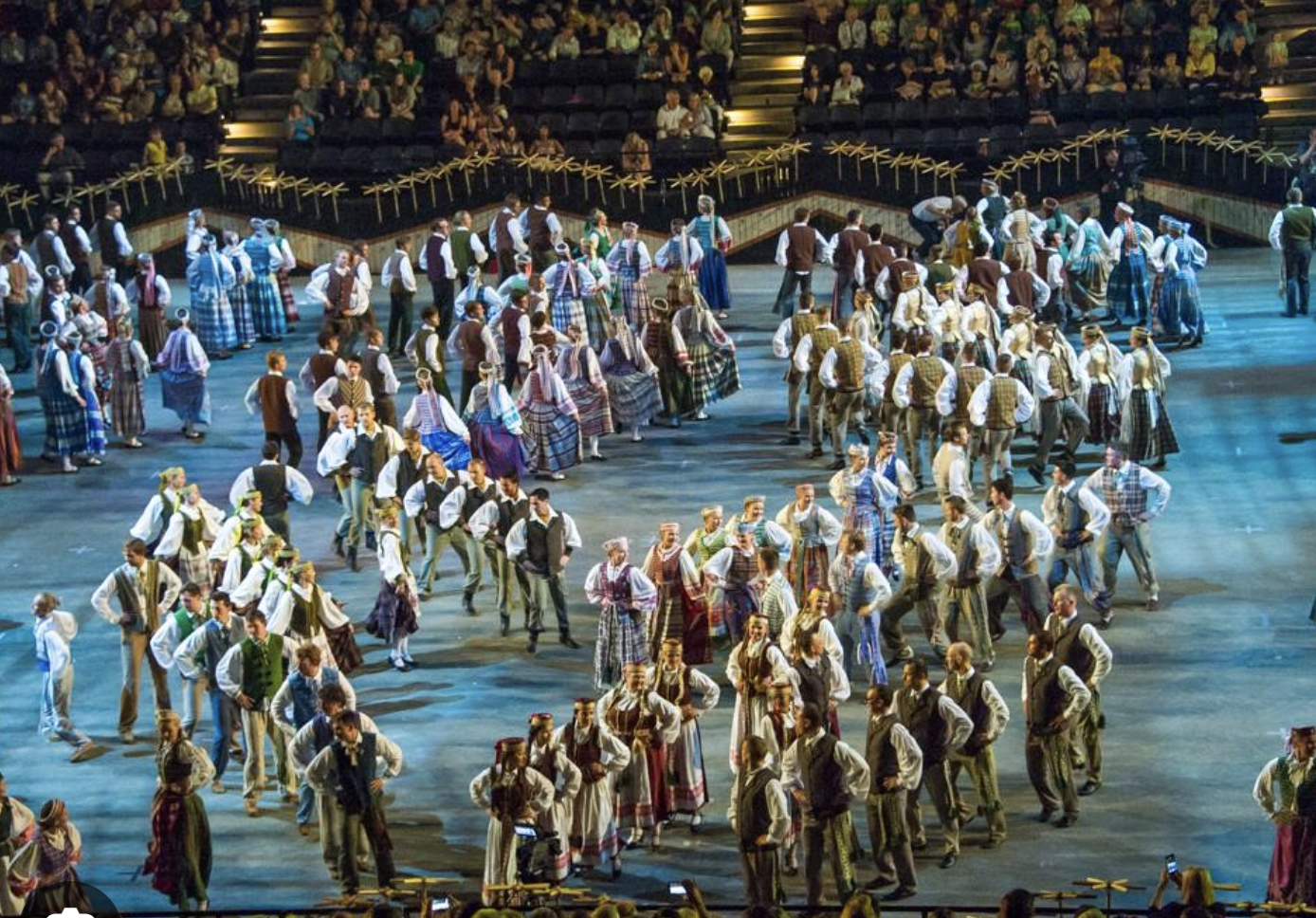
Festival took place in Chicago, 1,100 dancers performed in quadrants to better showcase the formations and patterns integral to Lithuanian folk dances.
Artistic Director: Liudas Sagys.
1968
III Folk Dance Festival
Festival took place in Chicago, 1,500 dancers executed nearly 20 traditional dances. A choir accompanied their performance.
Artistic Director: Jadvyga Meiliunaite-Matulaitiene.
1972
IV Folk Dance Festival
Festival took place in Chicago, dance groups from South America and Germany traveled to Chicago to join the 1,700 dancers who performed for First Lady Patricia Nixon.
Artistic Director: Genovaite Dumciute-Breichmaniene.
The chairman of the organizational group is Dr. Leonas Kriaučeliūnas.
1976
V Folk Dance Festival
Festival took place in Chicago. In celebration of the U.S. bicentennial, 1,800 dancers spelled out “200” and danced the Virginia Reel. First Lady Betty Ford was a special guest.
Artistic Director: Galina Gobiene.
1980
VI Folk Dance Festival
Festival took place in Chicago, showcasing more than 2,200 dancers, this was – and still remains – the largest folk dance festival.
Artistic Director: Nijole Jasenaite-Pupiene.
1984
VII Folk Dance Festival
Festival took place in Cleveland, moved beyond Chicago for the first time. More than 2,000 dancers participated.
Artistic Director: Jadvyga Reginiene.
The chairman of the organizational group is Dr. Antanas Butkus.
1988
VIII Folk Dance Festival
The celebration took place in Toronto, Canada, and featured groups from the USA, Australia, and Poland. A total of 1,800 dancers participated.
The leaders of the dance festival were Rita and Juozas Karasiejai, Genovaitė Dumčiūtė-Breichmanienė and Liudas Sagys. The chairman of the fundraising was Dr. Petras Kisielius, and a member of this committee was Valdas Adamkus.
1992
IX Folk Dance Festival
Festival took place in Chicago. For the very first time, a folk dance group from Lithuania – Vetrunge – joined the more than 2,100 dancers at this festival.
This celebration became historic, as it was the first time since the first Lithuanian Folk Dance Festival in the Diaspora, held in 1957, that representatives of the independent Lithuanian Government participated in it. Prime Minister of the Republic of Lithuania Gediminas Vagnorius represented the Lithuanian Government, and Minister of Culture and Education of the Republic of Lithuania Darius Kuolys also arrived at the celebration.
Another significant highlight of this celebration was the participation of a folk dance group from Lithuania, the Klaipėda ensemble „Vėtrungė“, in its program for the first time. It was a symbolic event that for the first time connected the Lithuanian diaspora around the world with the now free and independent Lithuania.
53 folk dance groups participated in the 9th World Lithuanian Folk Dance Festival, with about 2,200 dancers dancing in the square.
Artistic Director: Dalia Dzikiene.
The chairman of the organizing group is Dr. Petras Kisielius.
1996
X Folk Dance Festival
Festival took place in Chicago. At this anniversary event, more than 2,000 dancers honored the previous folk dance festival artistic directors.
Artistic Director: Violeta Smieliauskaite-Fabianovich.
The chairwoman of the organizational group is Jūratė Budrienė.
2000
XI Folk Dance Festival
Festival took place in Toronto, Canada. Zilvitis, a traditional musical ensemble from Lithuania, accompanied the performance of 1,600 dancers.
Artistic Directors: Rita and Juozas Karasiejus.
2004
XII Folk Dance Festival
Festival took place in Chicago. Acting president of Lithuania, Arturas Paulauskas, was the special guest. Over 1,500 dancers participated.
Artistic Director: Rasa Soliunaite-Poskocimiene.
The chairwoman of the organizational group is Audronė Tamulienė.
2008
XIII Folk Dance Festival
The festival moved to the West Coast, Los Angeles in 2008. Three groups from Lithuania participated: Grandinele (Panevezys), Kalnapuse (Neringa), Sugrizus (Vilnius). More than 1,100 dancers performed.
Artistic Director: Danguole Razutyte-Varniene.
The chairmen of the organizational group are Jurgis Joga, Donatas Empakeris, Rimas Stočkus.
2012
XIV Folk Dance Festival
The 2012 festival in Boston marked the first time this festival took place on the East Coast. Over 1,800 dancers, representing 50 folk dance groups, participated in the event. The festival included groups from Lithuania, Poland, Sweden, England, Brazil, Canada and the US. This was one of the largest gatherings of dancers in the history of the folk dance festivals. The event attracted an audience of more than 4,700!
The leaders of the dance festival are Romas Jonusonis and Vida Brazaitytė.
The chairman of the organizational group is Marius Žiaugra.
2016
XV Folk Dance Festival
The 2016 festival was held in Baltimore, which has a rich Lithuanian history. The first Lithuanians arrived in Baltimore in 1876 and peaked to roughly 20,000 living in the Baltimore region in 1991. The XV Folk Dance Festival featured a performance of nearly 1,800 dancers comprised of 46 troupes from six countries. The oldest dancer was 77 and the youngest was 7.
Dance festival leader: Tomas E. Mikuckis.
Direction and Decoration: Simona Uzaitė.
The chairman of the organizational group is Linas Orentas.
2022
XVI Folk Dance Festival
The festival took place in Philadelphia, with 35 dance groups participating. A total of 912 dancers gathered for this event.
Artistic Director: Gintaras Grinkevicius.
The festival director is Vytas Čuplinskas.
The chairman of the organizational group is Virgus L. Volertas.